



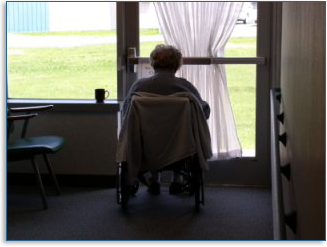
 You may suspect a loved one is starting to fail, and possible elder abuse is taking place, but what can you do? Anything? The answer is a definite “yes”! Certain preventive measures may be appropriate to minimize the chances that an elderly person will become a dangerous risk to himself/herself or a victim of financial and physical exploitation. Remember this: with elder abuse and financial exploitation, time is not your friend, and delaying your response may have devastating consequences. Here are some immediate and simple steps to take:
- Direct deposit Social Security checks. This is easy to arrange with the Social Security administration. Call your local Social Security Administration Office for the forms and procedures you must complete. You can go to the Social Security website HERE for the steps to take to become a “representative payee” for a vulnerable adult and safeguard their monthly Social Security or SSI check.
l - Create a joint bank account or establish a convenience checking/savings account so that you have banking authority and, equally important, access to the person’s daily and monthly transactions via the internet. You absolutely must get the predator’s name off the account and revoke their authority under an existing Power of Attorney, withdraw all of the joint funds, and place these funds under your safekeeping, but be careful how you act because you may then be accused by the predator of depriving the elderly person of his/her funds. Before you act, you may want to speak to me personally so I can lay out the process and explain in detail how things should be done and in what order.
- Consider recommending that the individual execute a new power of attorney (POA) appointing a reliable relative, family member, or friend as agent, who can also serve as the representative payee to handle the client’s Social Security, public benefits, pension funds, and/or establish a trust if the client has significant assets. Selecting an individual as a power of attorney should be done with great care. If a power of attorney is drafted, you may want to include provisions to minimize the chances of exploitation, such as limiting the amount of money that can be transferred by the agent, allowing transfers of money only into a trust or an account that benefits the elderly person, require regular written accountings and related documentation for transactions made under the power, or require that the principal be notified before a significant transaction is completed. Not all documents need this level of detail, but at least discuss it with an attorney. Consider drafting a contract, signed by the attorney-in-fact, that covers accountings, payment for services, documentation, and other precautions to limit the possibility of abuse. To learn more about Powers of Attorney, click here to go to my comprehensive page dedicated to a discussion about Powers of Attorney.
- As clients age, increasing physical and cognitive frailty will follow. A family member, friend, or “Trusted Advisor(s)” can step into monitoring roles. Here are some examples: If a child is named as agent under a durable power of attorney, monitoring the transactions of the aging person is a vital role to protect the person and preserve family harmony and finances. The same applies when a revocable trust is in place to protect aging persons. Children and other non-professional family members should consider monitoring the aging person, especially when the aging person is acting as their own trustee. I call this person a financial monitor. Reviewing records of past transactions and comparing them with current investment and expenditure performance may help identify changes warranting follow-up investigation. If the amount of cash being withdrawn has grown dramatically, it might (likely is) an indication of elder financial abuse, e.g., a home health aide walking the client to visit various ATMs, scam companies promising big winnings if the person sends them money, and the list goes on. But it may be established (and hopefully it is) by adopting financial monitoring, which might simply establish that the aging person is freely and voluntarily giving gifts to family, loved ones, and/or others. It pays to know.
After exploitation has occurred, your options are limited. Taking the above actions may help to minimize further exploitation. You may also want to consider filing criminal charges or civil proceedings against the perpetrator of the exploitation. Theft is not limited to robbing a bank at gunpoint. (See page entitled “NJ Laws on Elder Abuse” found on this site; look under the Table of Contents) found on the Home Page.
Drafting Advance Planning Documents to Reduce the Risk of Abuse or Exploitation
We use a variety of tools, such as drafting a power of attorney and a health care directive, to carry out the goals of advance planning and decision-making if the declining person should seriously lose the ability to make reasonable choices. The same tools used to empower agents and advisors to help make and carry out decisions, in the event of incapacity, can become tools of abuse and exploitation.
But there are risks to consider: the health care surrogate or proxy may begin making health care decisions that are clearly not in the best interests of the person. The agent under a power of attorney can mismanage or steal assets, empowered by the appointment as an agent. So what can and should be done if the agent does not meet expectations?
Careful Selection of Agents and Decision Makers
The first step to minimize risk in advance planning is carefully selecting agents for health care, financial, or personal decision-making. Most families default to a spouse, child, or other close family member. Individuals and families need to take time to discuss the agent’s responsibilities together. Some of the responsibilities of an agent include:
- Actually knowing and understanding the goals and values of the person they will be assisting;
- Making decisions similar to what the person would have made if they were still able;
- Safeguarding the welfare and safety of the person and their property;
- Avoiding conflicts of interest; and
- Acting as a fiduciary
Characteristics to Look for in an Agent or Proxy
Selecting an agent or proxy is a big decision. The client should know the person and feel comfortable that the person selected will be able to make decisions that reflect the wishes of the designator. Here are some of the characteristics I recommend to clients and families when selecting an agent or proxy:
- Trustworthiness: If there are any doubts about a prospective agent for any reason, name someone else.
- Commitment: The agent should be committed to the values of the person in exercising supported decision making.
- Being willing to listen: Active listening to the person in need is required for good decision-making.
- Available: The agent needs to be nearby or easy to contact when decisions need to be made. The agent should also be over 18 and healthy enough to be available and act.
- Organized: The agent needs to keep good records, complete tasks on time, and calendar necessary actions.
- Emotional strength: Being a health care and financial decision maker can be (very) stressful. The agent needs to have the strength of character to make hard decisions.
- Be diplomatic: the agent should be able to resolve conflicts when disagreements arise between family members. The agent needs to be able to hear everyone out, explain the options, and the reason(s) for the chosen option.
While it is impossible to predict exactly how an individual will act as an agent in real time, certain characteristics are red flags for both the individual and the attorney when selecting an agent. Here are some characteristics the client may want to avoid when selecting an agent or proxy:
- A person who lacks emotional stability or strength
- Past and/or present personal financial problems (agents who steal money frequently do so because they need money)
- Someone in poor health
- Persons who are not easily available when needed
Drafting Health Care Directives: Discussing Health Care Values
The first step in ensuring an advanced health care directive is used to make health care decisions that reflect the values and goals of the person is the careful selection of the agent, as discussed above. The second step is a conversation among the person, the agent, and other family members about health care goals and values. Health care values are deeply held personal beliefs about the kind of care a person wants, or does not want, and about what is most important in the person’s life. Health care goals are the desired outcome for treatment. Values are deeply held and long-lasting, while goals are formed during illness or injury.
A common misconception in health care planning is that a person can dictate all future health care decisions to an agent well in advance. However, because the spectrum of health conditions is so incredibly broad, it is very difficult to mandate specific treatment that will be useful or effective in the future. Directions commonly included in living wills about specific treatments are often difficult for the agent and the health care practitioner to interpret. It is hard to tell when death is imminent, or there can be disagreement about whether the person will ever regain consciousness. The agent should have a meaningful understanding of the person’s strongly held values. This understanding will provide much more useful guidance when it is time to decide.
The person and the agent should have these value conversations as described above, early and often. The conversation should also be held between the person and involved family members, with the person leading the discussion. This will, or at least should, help foster open communication between family members. If the person is eventually unable to make or communicate decisions, open communication among family members is a helpful practice to avoid poor decisions by the health care proxy or agent.
Learn the Protective Actions You Can Take to Prevent or Minimize Elder Abuse and Exploitation
PROTECTIVE ACTION TO PREVENT OR MINIMIZE ELDER ABUSE
When an elderly person is a victim of domestic violence, the individual should consult New Jersey’s elder abuse and exploitation laws (see page title “NJ laws on Elder Abuse” found on this site). This page goes into significant detail about NJ laws that govern elder abuse and exploitation. It may be possible to obtain a temporary restraining order or domestic violence injunction, or to commence a separate maintenance or divorce proceeding, depending upon the elderly person’s wishes.
Learn About A Protective Arrangement: A Really Different Type of Quasi-Guardianship Action to Protect an Incapacitated or Vulnerable Person
There is a seldom-used but potentially effective alternative to guardianship, which can address elder financial abuse and exploitation faster and with less focus on the mental competency of the victim. Consider the following:
A Guardianship action is filed when a person is incapacitated and cannot make decisions on their own. It requires someone else to come in and make those personal, medical, and/or financial decisions for them. A guardianship proceeding is a court action to declare a person incapacitated (i.e., mentally incompetent) and to appoint another person as the legal guardian. Sometimes (certainly not always), the process can be time-consuming and costly, depending on whether the proceeding is contested. The law also disfavors the use of forced guardianships and prefers that the person declared incapacitated have as much decision-making power as reasonably practical.
While a guardianship requires proof that the abused person is incapacitated, a protective proceeding does not. What must be demonstrated is that the elderly person is subject to the influence of a predator (family member, “friend”, caregiver, spouse, etc.) and is being exploited and, therefore, needs protection. Filing such a legal action does not require two doctors’ reports, medical proof, and the other formalities of a guardianship or conservatorship proceeding. But it does require some examples (proof) of exploitation and/or abuse that warrant a court’s protective order.
So, what if a loved one needs help and some limited protective oversight over his or her finances to prevent these resources from being wasted, while still preserving the person’s autonomy to use his or her finances as he or she chooses? The remedy is a “protective arrangement”. The court is empowered to appoint a protective arrangement for an elderly and/or disabled and/or incapacitated person, or an alleged incapacitated person if there is property owned by him or her that could be exploited, wasted, or dissipated, or if funds are needed for the care and support of the person. If this finding is made, the court can set up a protective arrangement to ensure that either the property is not wasted by the person or that the accounts are set up to provide for this person’s care.
The court can order a variety of protective arrangements if they are in the person’s best interests. So, for example, the court can require the parties to set up a joint bank account and require that both account holders approve each transaction. The court can order a house to be sold or restrain a person from mortgaging his/her property. The court can also order the person at risk to obtain life care services and support and set up a trust through which property can be held. Even directing a person to execute a prenuptial agreement before getting married is quite possibly within the Court’s discretion if the above considerations are made.
The difference between a guardianship and a protective arrangement is that a guardian has complete or near-complete control over their ward’s assets. In a protective arrangement, a person generally understands what is going on around them but needs oversight from another person to protect some or all of their assets. The arrangement is less restrictive than a guardianship and covers only those designated circumstances, should they apply. As with most things, consideration must be given before deciding on the best course of action for a friend or loved one.
PROTECTIVE COMPLAINTS CAN BE QUITE EFFECTIVE. It gets you into court quickly and often intimidates and immediately stops predators from stealing further. If you’re interested in discussing this option, I welcome you to call me at (732) 863-9900 or email me at fniemann@hnlawfirm.com.
Office of the Public Guardian and Adult Protective Services
An adult guardianship may be desirable or necessary for a victim who has lost capacity. New Jersey provides for a “public guardianship,” that is, court appointment of a public official or agency to serve as guardian of an incompetent person, usually when no private person or agency is available or willing to assume this responsibility. You may find that a public guardianship is the only route available to provide ongoing assistance if or when you, or for that matter, anyone is unable to maintain continued involvement or there are insufficient assets to pay for a professional guardian. A guardian can be authorized to make legal, financial, and health care decisions for the ward. Depending on the terms of the guardianship, the guardian may be given decision-making power over (only) those areas in which the incapacitated person is unable to make responsible decisions. This is called a limited guardianship. Especially important is the appointment of a guardian of the property, which gives the guardian powers over the person’s finances, including banking, social security, veterans’ benefits, paying bills, borrowing or loaning money, and buying or selling real estate and stock accounts.
You can also visit the following page found on this site. Click HERE to read more about protective actions you can take now.
How a Guardianship Can Help Protect Against Elder Financial Abuse
Challenging Gifts Made Because of a Lack of Capacity, Financial Exploitation of an Older Individual Under New Jersey Elder Abuse Laws

Fredrick P. Niemann Esq.
Suspect elderly abuse like that described on this page? Not sure what to do? Then contact Fredrick P. Niemann, an experienced New Jersey elder abuse and financial exploitation attorney at (732) 863-9900 or email him at fniemann@hnlawfirm.com.
He welcomes your inquiries, and you will find it easy to discuss your concerns in confidence and in private.